Service

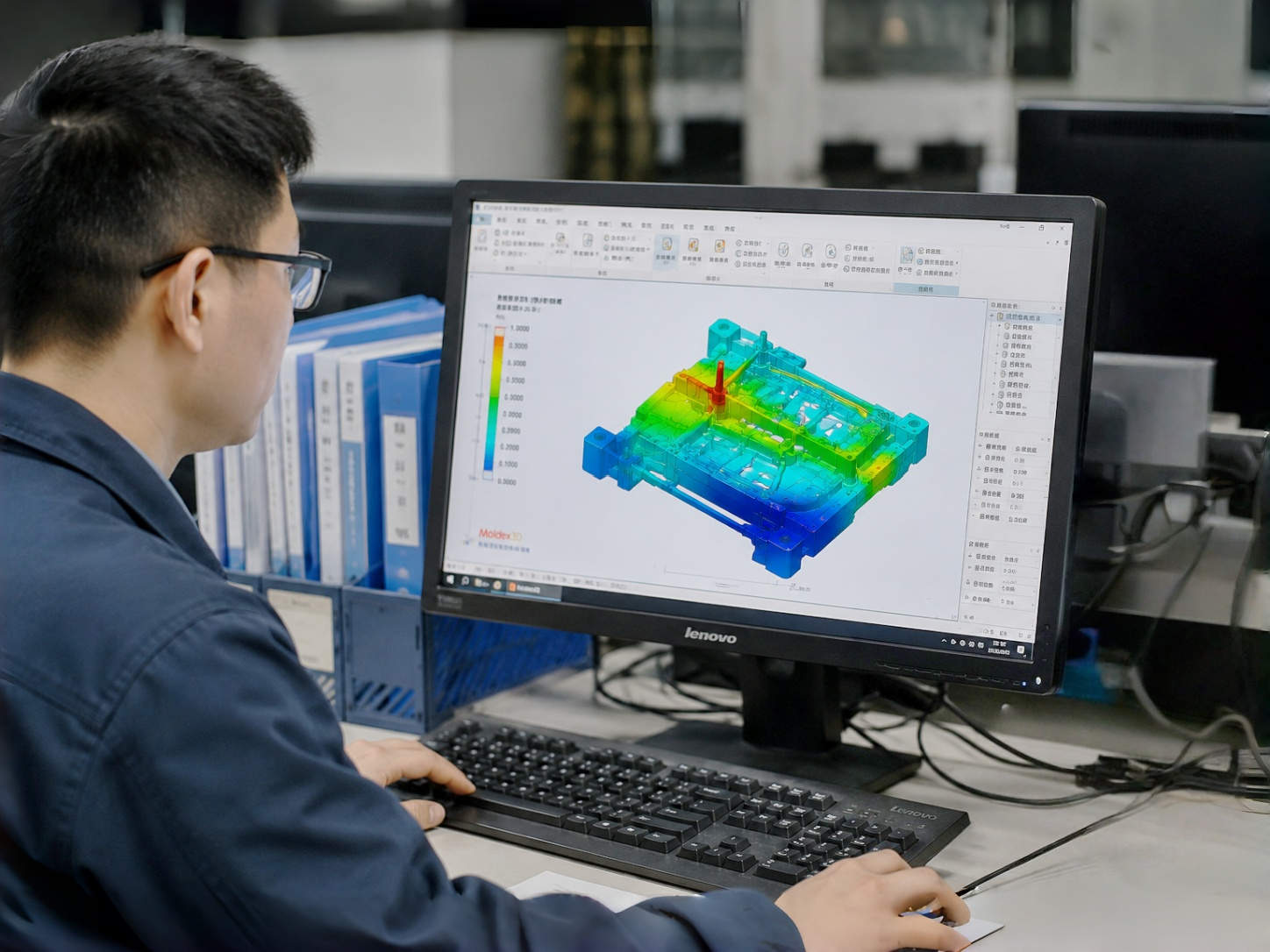
Mold Flow Analysis & Structural Design

Prior to mold manufacturing, our engineering team utilizes advanced Moldflow analysis technology to conduct comprehensive flow simulations for large components. By determining the optimal gate location, cooling channel layout, and clamping force distribution, we optimize the entire mold structure before steel cutting begins. We deliver complete 3D mold design solutions that account for thermal expansion and material flow, providing precise guidance for multi-tonnage mold plates.
Heavy-Duty Rough Machining

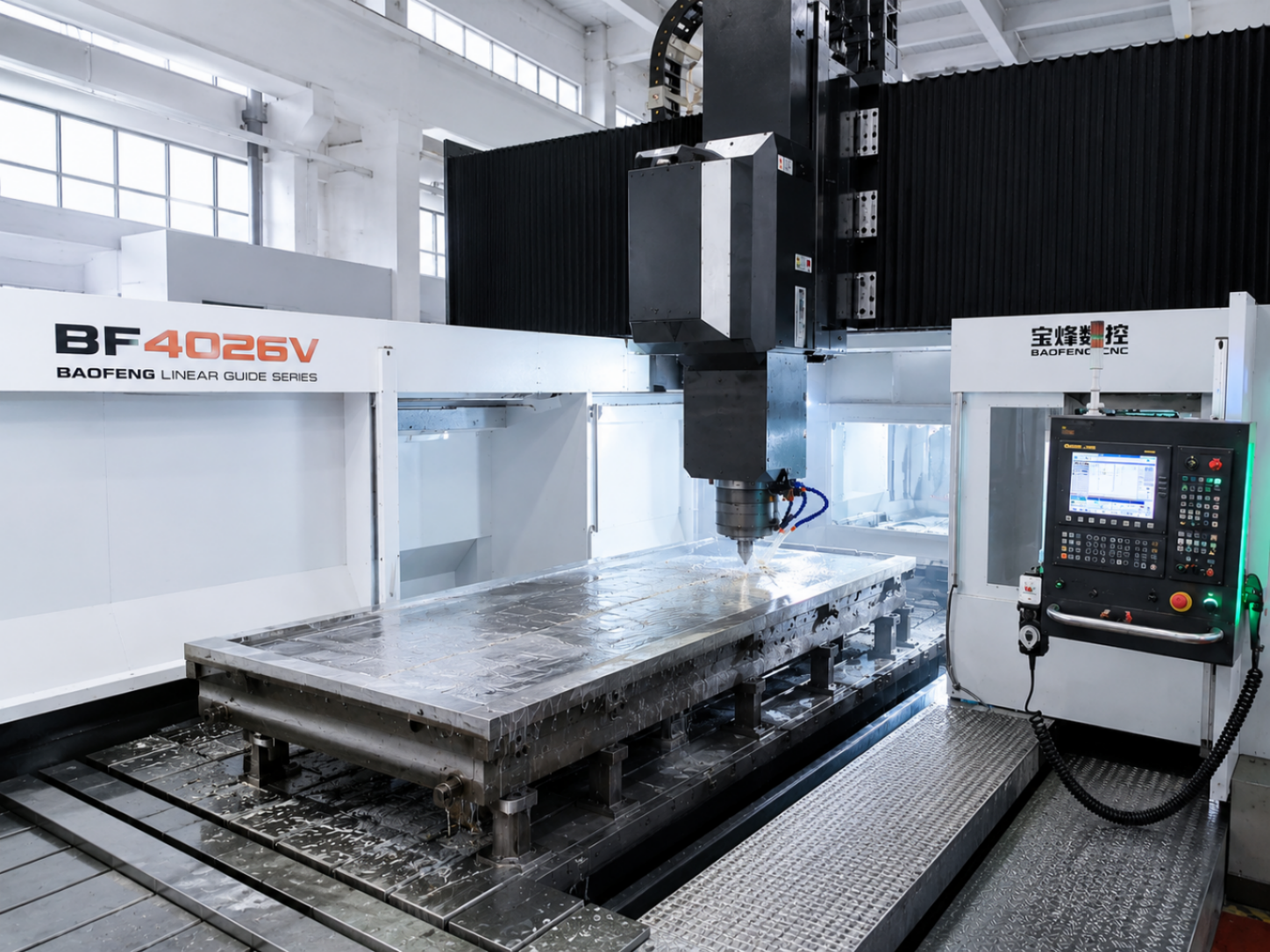
For large molds such as automotive bumpers and dashboards, we utilize the BF-4026V large CNC machining center (working travel: 4000×2600×1000mm) for efficient rough machining. This stage focuses on the rapid removal of large volumes of steel to leave appropriate stock allowance for subsequent precision machining, while ensuring the flatness and positional accuracy of the mold base, thereby laying the foundation for the overall stability of the mold.

Precision Cavity Machining & 5-Axis Integration

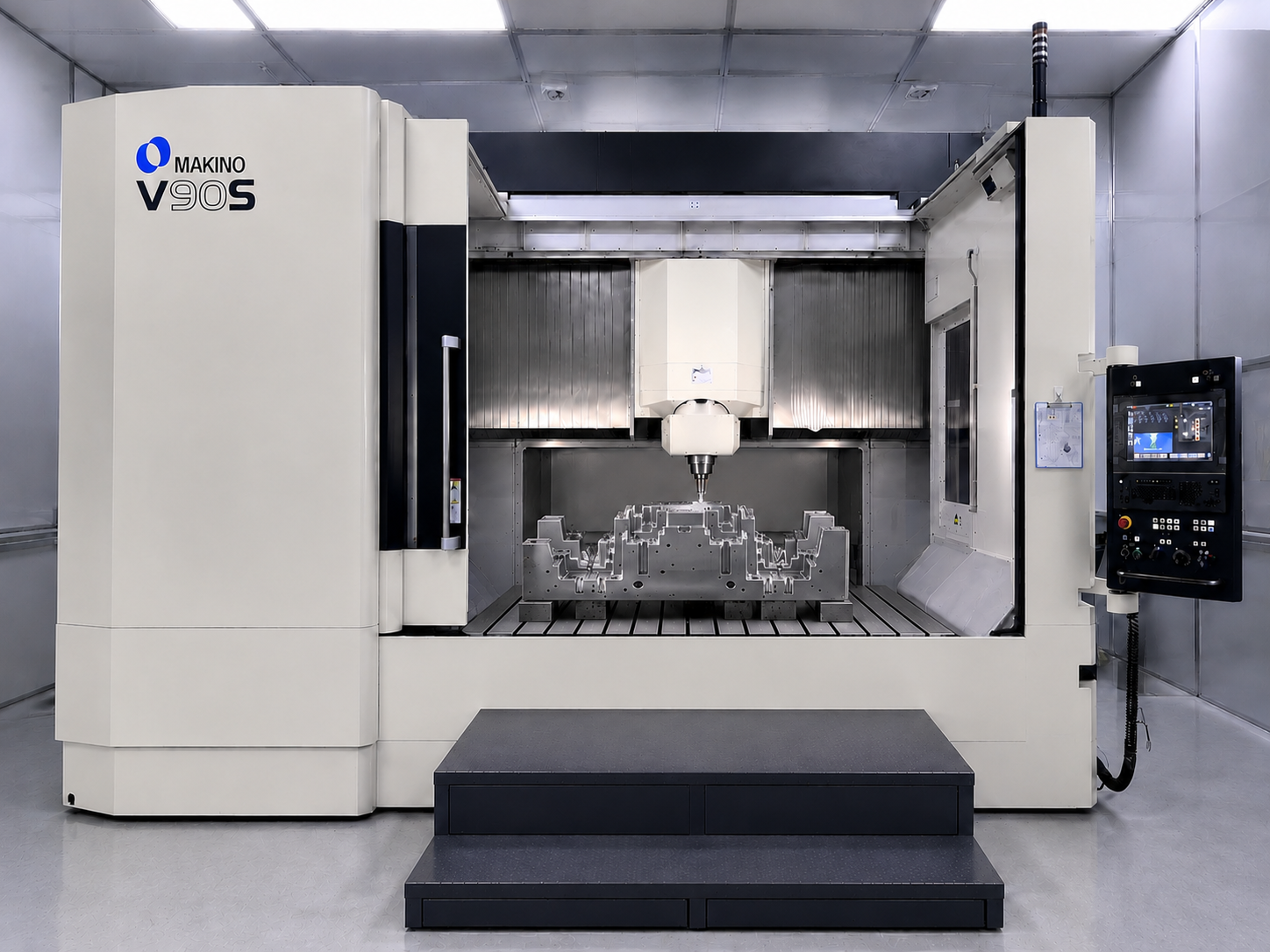
In the finishing stage, the Makino 5-axis V90S machining center plays a pivotal role. Its 20,000 RPM high-speed spindle, combined with 5-axis simultaneous machining capability, enables the precise processing of complex surfaces, deep cavity structures, and angled holes in a single setup. Compared to traditional 3-axis machining, 5-axis technology reduces cumulative errors caused by multiple clamping operations, ensuring the overall accuracy of large molds is controlled within ±0.01mm, making it particularly suitable for the high demands of automotive interior and exterior molds.

Precision EDM & Detail Formation

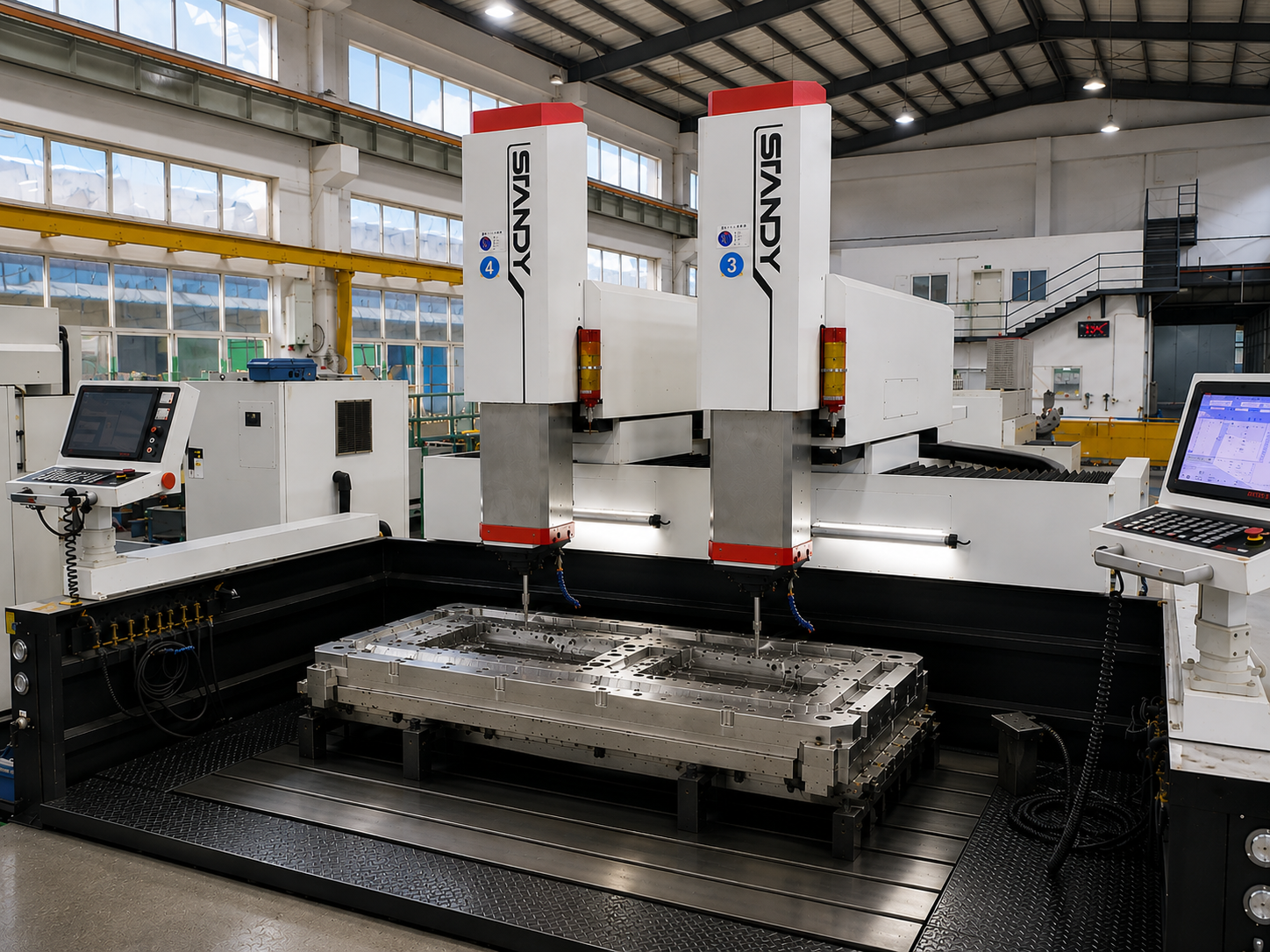
For high-hardness steel (above HRC50) and narrow slots or sharp corners inaccessible to traditional cutting, we employ precision EDM technology. STANDY series large-scale EDM machines (such as the 2510 LL PNC/60A dual-head model) stably process large electrodes, achieving a surface roughness of Ra0.2μm through mirror-finish EDM processes. This step ensures the perfect realization of mold details, particularly the high-quality formation of fine features like textures and logos.

Mold Assembly & Fitment Debugging

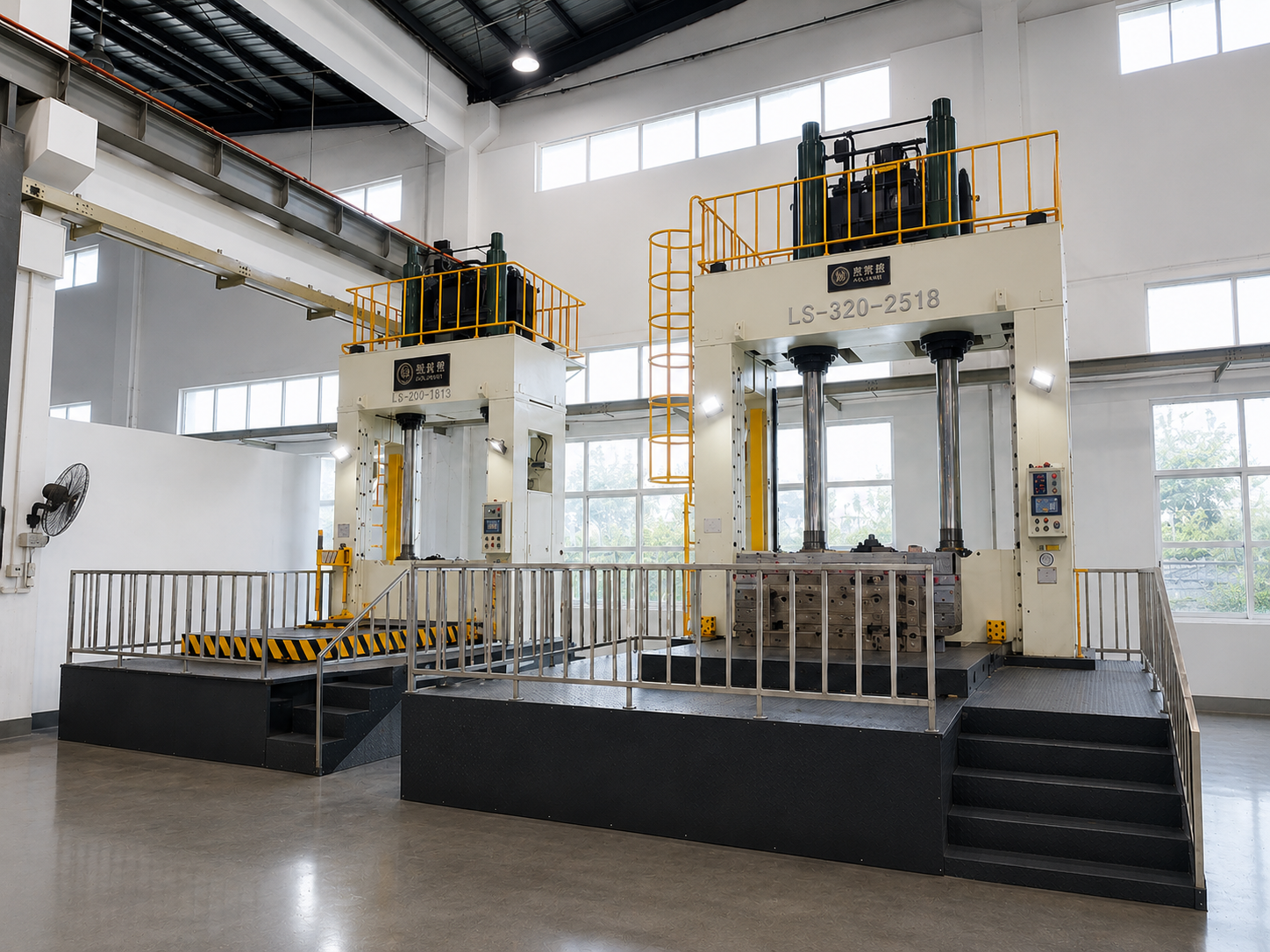
Upon completion of mold machining, the critical assembly phase begins. We are equipped with the LS-320T large mold clamping machine, supporting precise clamping operations with a maximum locking force of 320 tons. Our professional benchwork team, utilizing precision measuring tools, meticulously adjusts moving mechanisms such as sliders, ejector pins, and cooling channels to ensure reasonable fit clearances and smooth operation. This process often requires multiple iterations until the mold achieves its optimal working state.

Trial Molding Verification & Process Parameter Optimization

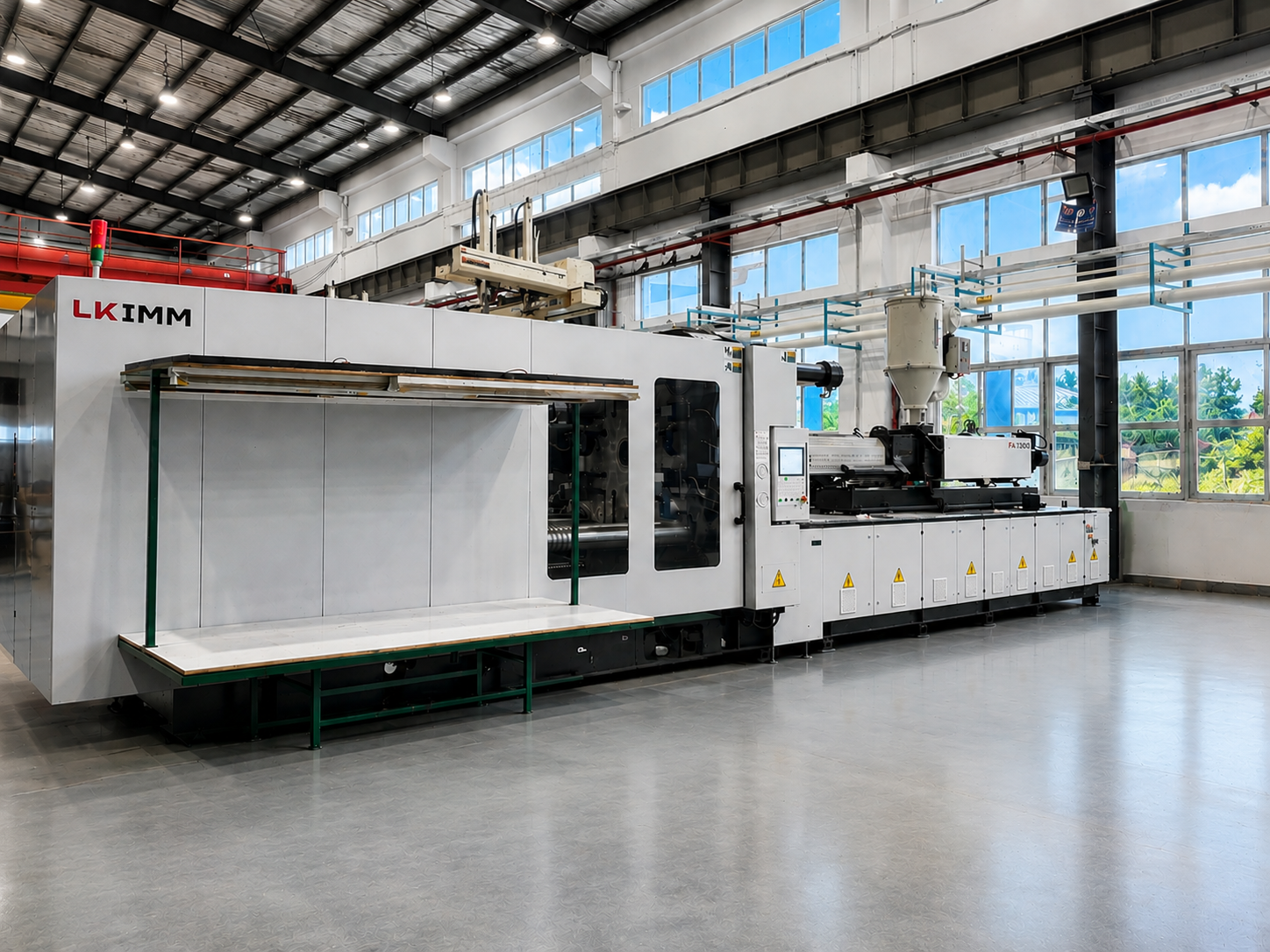
Comprehensive trial molding verification is required before mold delivery. We have full-range injection molding capabilities from 15 to 3000 tons to meet various trial molding needs. By scientifically adjusting key process parameters such as injection pressure, holding time, and cooling cycle, we monitor product quality in real-time and promptly correct mold defects. Trial molding data is systematically organized into complete process parameter cards, providing standardized basis for mass production and ensuring traceability of production stability.

Precision Inspection & Mold Acceptance

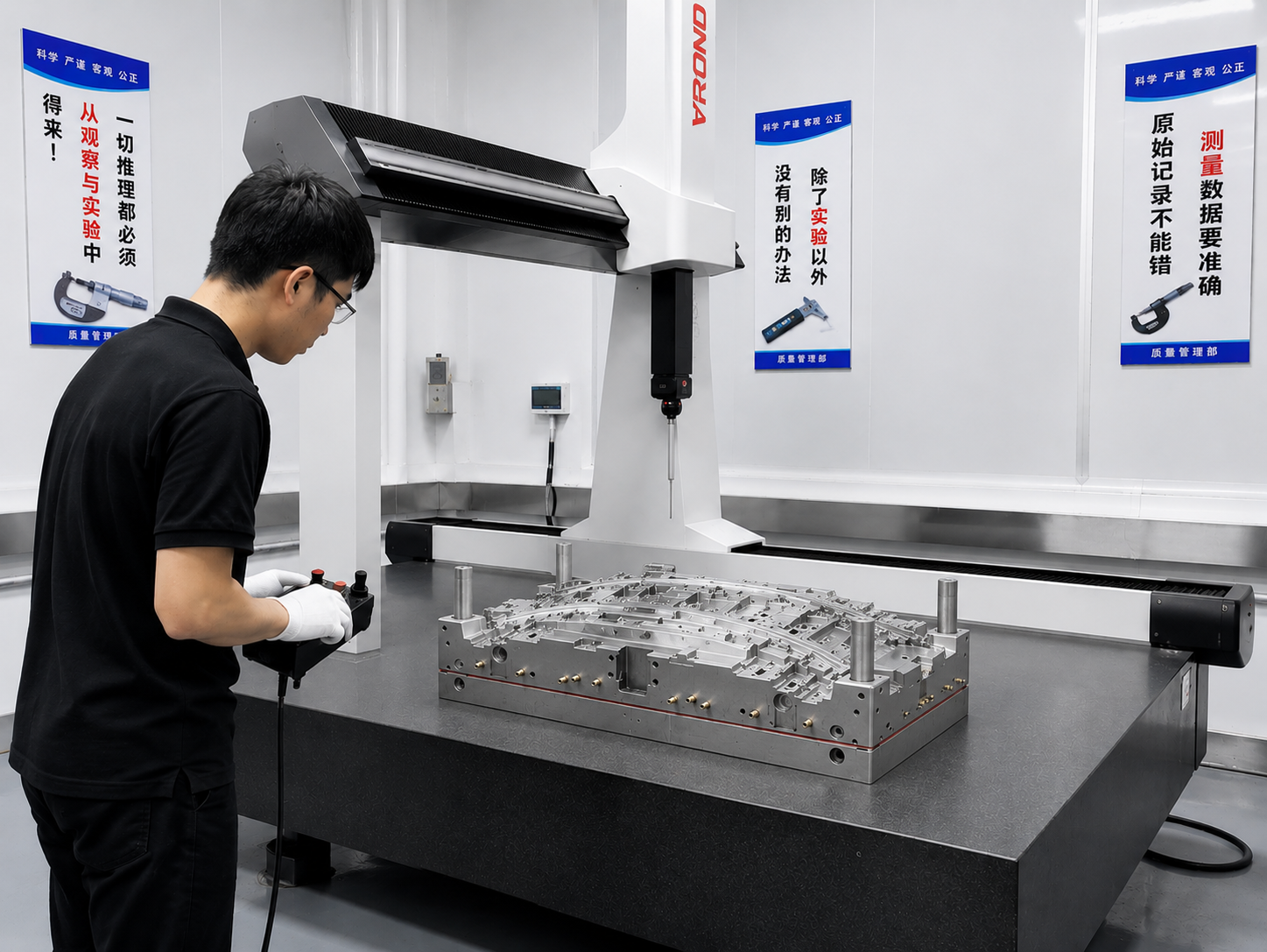
Before mold delivery, comprehensive dimensional and geometric tolerance verification is conducted using high-precision inspection equipment. We are equipped with Coordinate Measuring Machines (CMM) and other precision devices capable of full-dimensional inspection of large molds, ensuring the machining accuracy of cavities, cores, and sliders meets design requirements. Leveraging advanced equipment including Zeiss CONTURA G2 and Hexagon Croma 6106, we achieve precise control over complex surfaces, deep-cavity structures, and assembly accuracy, providing reliable data support for mold acceptance and subsequent mass production.

Scalable Production & Quality Control

Upon entering the mass production phase, we rationally allocate injection molding machine resources based on product characteristics and volume requirements. The workshop is strictly managed in accordance with ISO 9001 standards, implementing full-process quality control including first-article inspection, in-process patrol inspection, and last-piece comparison. Whether for large automotive structural components or appliance housings, we provide stable mass production capabilities, ensuring every product meets customer quality requirements.